From scene-setting audio in anime, games, and stage productions, to impact sounds in battle scenes and the click of a menu selection, ambient sounds and sound effects (SFX) are something we encounter every day.
Understanding the different roles of ambient sounds and sound effects, as well as how they’re created, can help enhance the realism and immersion of any production.
In this article, we’ll explain what ambient sounds and sound effects are, how they’re created, and introduce Foley sound, a topic that often comes up alongside ambient sounds and SFX.
What Are Ambient Sounds and Sound Effects?
What Are Ambient Sounds?
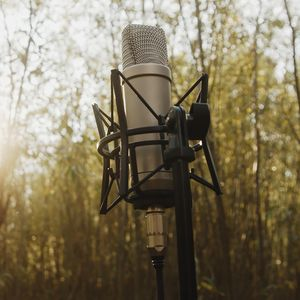
As the name suggests, ambient sounds are the sounds you hear from your surrounding environment. Examples include the sound of rain, passing cars, and people talking in the background.
Because these sounds are so familiar, it’s easy to take them for granted. However, they play an important role in setting the scene through audio alone, whether it’s the feeling of being in a forest or underwater, or the difference between a quiet residential neighborhood and a busy entertainment district.
What Are Sound Effects?

Sound effects are sounds added to stage performances, films, and other productions as part of the overall presentation.
Examples include the drum roll used on radio and television programs or the sound played before a quiz question is revealed.
Like ambient sounds, sound effects help establish a production’s atmosphere and world. However, they are more closely tied to dramatic presentation and storytelling.
For example, sound effects can emphasize a user’s actions, such as the impact sound during an action scene or the electronic click heard when pressing a button. This ability to enhance on-screen actions is one of their defining characteristics.
What Is Foley Sound?

Among ambient sounds and sound effects, there is a specialized category known as Foley sound, which is created by performing and recording sounds in sync with the video as it plays.
As digital production has become more common in recent years, Foley has come to refer specifically to sound effects that are physically performed and recorded using real objects, distinguishing them from digitally created or library-based sound effects.
You may have seen examples such as shaking a colander filled with dried beans to recreate the sound of ocean waves, or stepping on a bag filled with flour to simulate footsteps in snow.
One of Foley’s greatest strengths is its ability to create sounds tailored to a specific production or scene, resulting in a greater sense of realism and immersion. Because each sound is crafted specifically for a particular character or moment, it helps draw the audience deeper into the world of the production.
Even something as simple as footsteps are carefully performed and recorded, taking into account details such as the type of shoes the character is wearing, the equipment they’re carrying, and the speed at which they walk.
What Types of Productions Use Ambient Sounds and Sound Effects?
Ambient sounds and sound effects are used across a wide variety of media, including video games, films, television dramas, anime, and stage productions, as well as audio content such as radio dramas, narrative podcasts, and ASMR content.
Audio content naturally relies especially heavily on ambient sounds. Because these formats are built entirely around audio, ambient sounds and sound effects play a crucial role in helping listeners imagine the scene.
Outside of entertainment, ambient sounds such as ocean waves or rainfall are commonly used as background audio in office or work spaces to improve concentration and create a more productive working environment.
How Are Ambient Sounds and Sound Effects Created?
There are four main methods for creating ambient sounds and sound effects.
1. Recording Real-World Sounds
Commonly heard ambient sounds, such as the bustle of a city street, the atmosphere of a train station platform, or birds singing, are often created by recording real-world sounds on location.
2. Creating Sounds by Layering Commercially Available Sound Libraries
A wide variety of ambient sounds are available through online sound libraries, including many that can be used as free resources.
In some cases, these existing sound assets are layered and combined to create original ambient soundscapes.
If you use free sound libraries, be sure to review the licensing terms, especially regarding commercial use, to avoid unexpected issues. These terms are typically provided on the website where the sounds are distributed, so don’t forget to check them before use.
3. Creating Original Ambient Sounds with a Synthesizer
If you want to create completely original ambient sounds instead of using existing sound assets, you can generate them using a synthesizer or a digital audio workstation (DAW).
Many sounds used in video games—such as level-complete chimes, warning alerts, and scene transition effects—are commonly created this way.
4. Creating New Sounds Using Everyday Objects
Depending on the scene, even authentic, on-location recordings may not sound convincing enough. If the audio doesn’t match the on-screen action, custom ambient sounds or sound effects may be created specifically for the production’s requirements using everyday objects (using the aforementioned techniques of Foley sound).
Examples of Ambient Sounds and Sound Effects Created from Everyday Items
In film and theater production, it’s still common practice to create convincing ambient sounds and sound effects using ordinary, everyday objects.
Here are a few examples of how familiar items are used to recreate realistic sounds.
Slicing Fruit or Vegetables = Sword Slashes
The sound of quickly slicing through vegetables such as cabbage or Chinese cabbage is often used in period dramas to recreate the sound of a sword cutting through an object or a person.
Crushing a Water-Soaked Tissue = Bleeding Wounds
In horror productions and other scenes depicting heavy bleeding, the sound of squeezing a tissue soaked with water is often used to recreate the effect.
Crushing Eggshells = Crunchy Snacks
This technique is even used in television commercials to create a satisfyingly crisp crunch, making snack foods sound even more delicious.
Rolling Dried Beans in a Colander = Ocean Waves
This is a classic Foley technique: by adjusting the speed at which the beans are rolled and the amount of beans used, it’s possible to recreate waves of varying sizes and intensities.
Trust G-angle for Ambient Sound, Sound Effects, and Foley Sound Production
If you’re looking for high-quality ambient sounds, sound effects, or Foley sound tailored to your production, we’d love to help! Get in touch with G-angle to discuss your project.
Founded as a music production company, G-angle has over 20 years of experience creating audio content. Backed by our extensive track record, we deliver high-quality sound production that brings your projects to life.